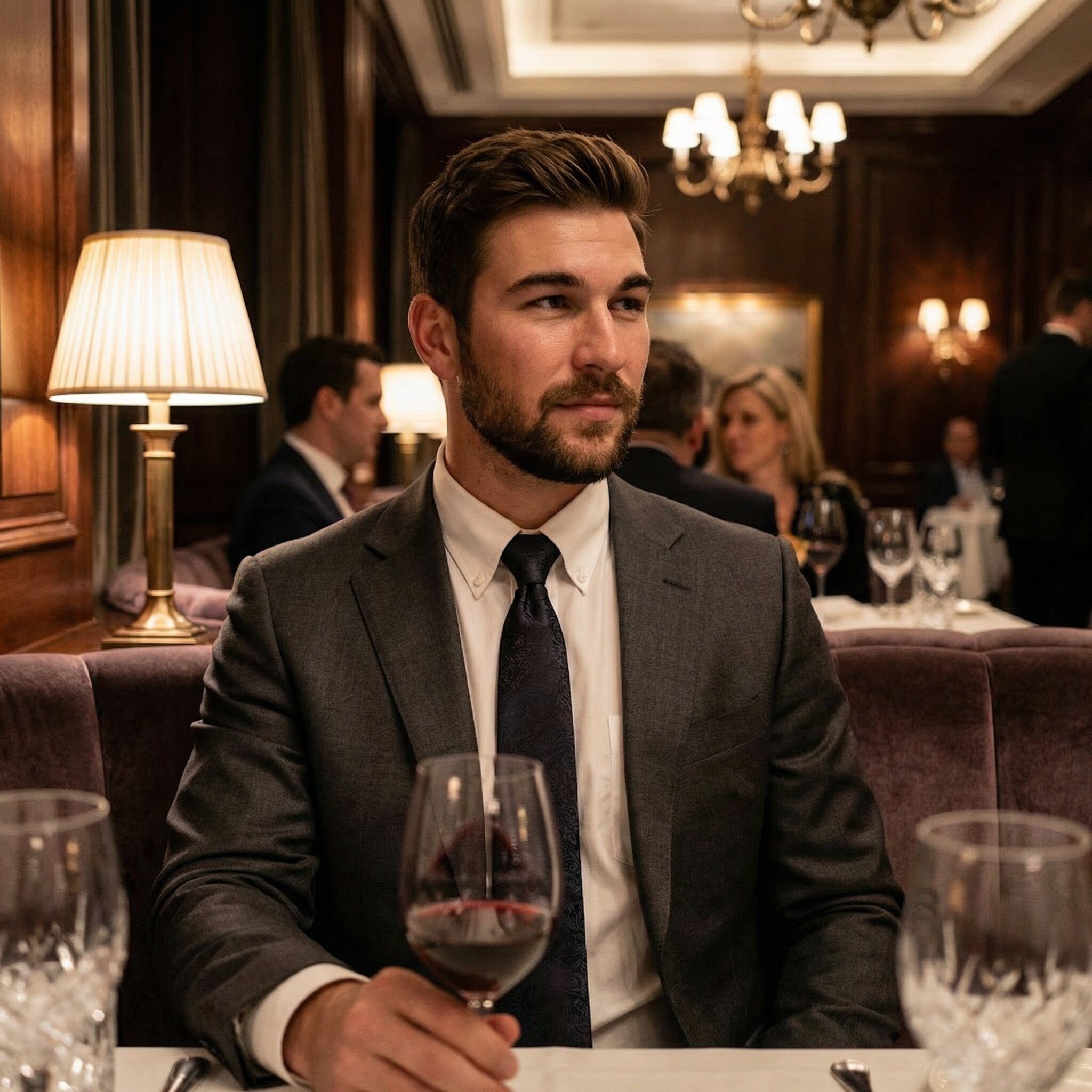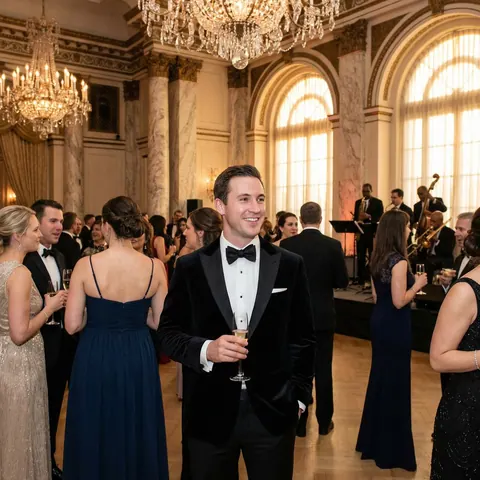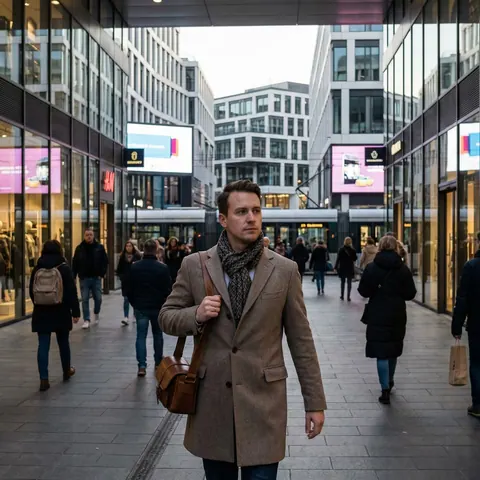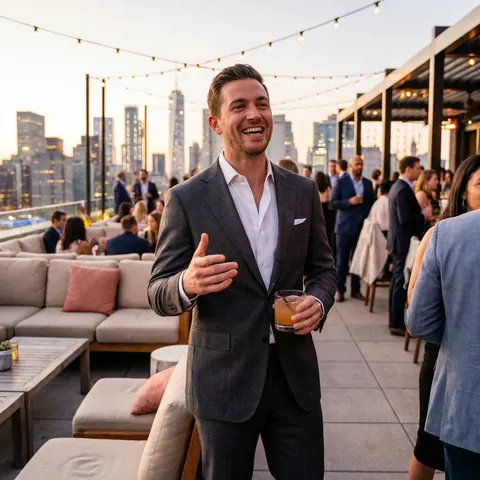
What makes a good Hinge photo lineup?
Good Hinge photos for men make it easy to recognize you and get a sense of your everyday life. Start with a clear portrait, then add pictures that show your full appearance, interests and surroundings. Each image should answer a different question. Six versions of the same headshot offer less context than a smaller, varied selection.
You do not need an impressive destination, a particular body type or a professional shoot. Choose recent pictures that look like you. The examples below are editorial suggestions, not a tested formula or a promise of more matches.
Choose your first photo
Look at your candidates at the size they will appear on a phone. A photograph that looks sharp on a large screen can become hard to read after cropping. For your Hinge first photo, check:
- You are the only person in the frame and are easy to identify.
- Your face is visible, without sunglasses, a phone or a deep shadow covering it.
- Your appearance matches how you look now, including hair and facial hair.
- Your eyes and face are in focus, with enough space around your head for cropping.
- The background leaves your face easy to see.
Consider these three choices before deciding:
| Candidates | First-photo choice | Reason |
|---|---|---|
| Portrait in open shade or a beach shot in sunglasses | The portrait | Your eyes and face remain visible. The beach shot may belong later if it adds context. |
| Solo portrait or a dinner photo with friends | The solo portrait | Someone seeing your profile for the first time does not have to identify you in a group. |
| Natural skin detail or a heavily smoothed close-up | The natural portrait | It gives a clearer idea of your current appearance. |
Choose an expression you recognize as your own. A relaxed neutral expression is usable; you do not have to force a broad smile. If none of your portraits passes these checks, take another rather than trying to rescue an unsuitable crop.
A practical lineup: four core photos and two optional additions
Hinge's official profile guide specifies four to six photos depending on local requirements. Follow what your account requests. The four core roles below are a starting point; the last two provide ideas when you need more images. For requirements and preparation, see the Hinge photo checklist.
| Role | Example and purpose | Replace this weaker choice |
|---|---|---|
| 1. Clear portrait | A recent solo picture in soft daylight introduces your face. | Sunglasses or a distant silhouette. |
| 2. Full appearance | A relaxed standing photo shows your clothing and full silhouette. | A second headshot from the same session. |
| 3. Genuine interest | Preparing a dish you enjoy gives someone a specific interest to ask about. | An activity staged solely for the profile. |
| 4. Everyday context | Reading on your balcony shows an ordinary part of your life. | Another portrait with only a different filter. |
| 5. Optional social moment | One clear photo with friends adds social context. | A crowded group where you are difficult to find. |
| 6. Optional different occasion | A recent local outing adds a new setting or detail. | An old trip photo that no longer looks like you. |
The roles can overlap. A full-body picture taken during a real walk might also show an interest. Avoid forcing a group photo or pet picture if neither fits your life. If you need six images, find two additional moments that add information instead of repeating the same pose.
Worked example: choose a lineup from eight candidates
This is a fictional editorial exercise, not a customer profile or a performance test. Imagine Alex is choosing among these eight recent pictures. The decision is about clarity and variety, without scoring his appearance.