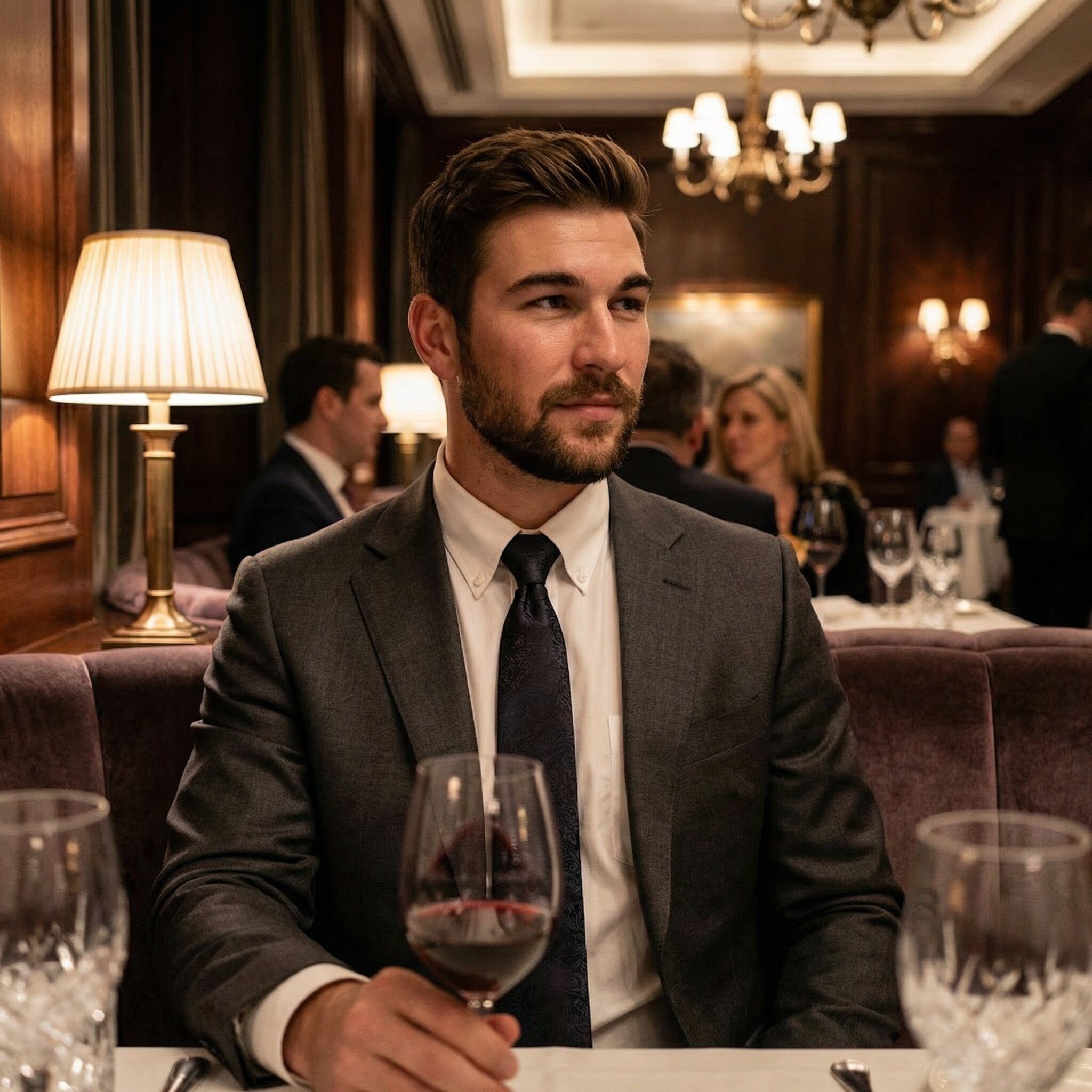
Check likeness before polish
People often select the most polished output first. Reverse that order. Compare the generated image with three ordinary recent photos. Look at eye spacing, nose width, jaw shape, smile lines, ears, hairline and any distinctive features. Allow for natural differences in expression and camera angle while checking whether the same person remains recognizable.
Small changes can add up. Smoother skin, a narrower nose and a sharper jaw may each appear plausible, yet together they create a different person. Ask a friend who sees you regularly which details feel unlike you. Their opinion is useful feedback, not an objective identity test.
The same rule applies to body shape. Clothing and camera angle can flatter you naturally. A major change to your apparent build or proportions can misrepresent your current appearance. Do not choose a younger-looking result simply because it is attractive.
Inspect the image at full size
Open the original output before judging the phone preview. Work through the details in a consistent order so that a flattering expression does not distract you from a visible mistake.
| Area |
What to inspect |
Reason to reject or review |
| Hands and objects |
Fingers, joints, grip and contact |
A hand merges into a cup or an object appears unsupported |
| Teeth and glasses |
Boundaries, alignment and reflections |
Teeth repeat unnaturally or a frame breaks across the face |
| Skin and hair |
Texture, hairline and edges |
Smoothing removes distinctive features or hair blends into clothing |
| Lighting |
Shadows, reflections and transitions |
Several details make the face and setting look disconnected |
| Clothing |
Seams, buttons, fabric and accessories |
Fasteners change shape or an accessory merges with the body |
| Background |
Text, railings, furniture and perspective |
Important objects are malformed or a sign contains meaningless text |
These are quality checks, not proof of AI use. Real photography can show smooth skin, unusual reflections, blur or light from several directions. Generated pictures can have convincing hands and textures. Avoid declaring an image artificial based on one isolated feature.
Then view the intended crop at phone size. Confirm that your face remains clear and that cropping does not remove a useful part of the scene. Do not use a tighter crop merely to conceal a misleading feature that remains in the full image.
Check what the scene implies
Ask what another person would reasonably infer from the picture. A neutral backdrop carries less biographical information than a recognizable summit, graduation ceremony or expensive vehicle. A believable setting does not make an invented event true.
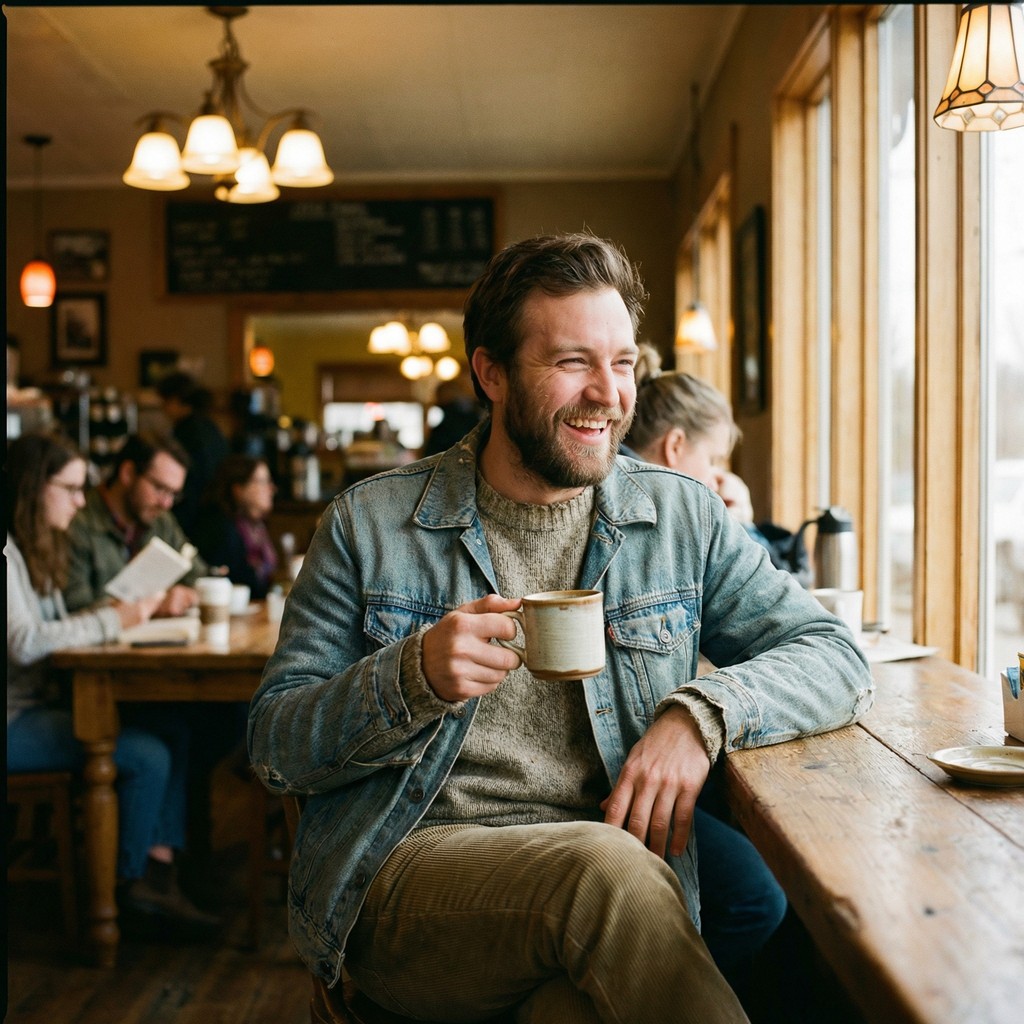
An ordinary cafe background might communicate the style of a portrait without naming a specific experience. A picture captioned as your recent visit to a famous cafe makes a different claim. Review the image together with its caption and the rest of your profile.
Choose material you can discuss honestly. If someone asks about the location or activity, you should not need to invent a story. When the scene creates a materially false impression, choose another image instead of relying on its technical quality.
Keep or reject: six examples
The following scenarios are hypothetical teaching examples. They are not customer results, tested MatchPhotos outputs or estimates of how often errors occur.
1. A recognizable everyday portrait
The face, hairline and current appearance match your reference pictures. The clothing and background are ordinary, with no visible errors. Decision: keep as a candidate. Review the full image and its role in the lineup before selecting it. This decision concerns quality and representation; the app's rules still apply independently.
2. A sharper jaw and a different hairline
The portrait looks professionally photographed, but it narrows your face and fills in your temples. Decision: reject. The problem is lost likeness, even if every pixel looks plausible. Better lighting should not require presenting a substantially different face.
3. Fingers merged with a coffee cup
Your face looks right, but two fingers blend into the handle and the grip makes no physical sense. Decision: reject. Select another output rather than treating a small phone preview as a way to hide the defect.
4. A slightly dark but accurate image
Your features and the scene remain coherent, but the exposure makes the face difficult to see. Decision: try a modest exposure adjustment and review again. Keep skin detail and normal color. If the edit changes features or requires reconstructing the face, choose another picture.
5. A convincing expedition that never happened
The image places you at a recognizable mountain summit with expedition equipment, although you have never made that trip. Decision: reject. Accurate anatomy cannot fix the false impression of an experience or achievement. A caption naming the expedition would reinforce the problem.
6. A fourth nearly identical portrait
The image passes the likeness and quality checks but repeats the same framing and expression as three selected pictures. Decision: omit from this lineup. It may be a usable image, but it contributes little new information. This is a selection issue rather than an authenticity failure.
Choose source photos and a final lineup
Start with recent, unfiltered source photos that clearly show your current appearance. Follow the generator's actual upload requirements. Several angles, expressions and lighting conditions can document the same person without combining years of different hairstyles or body changes.
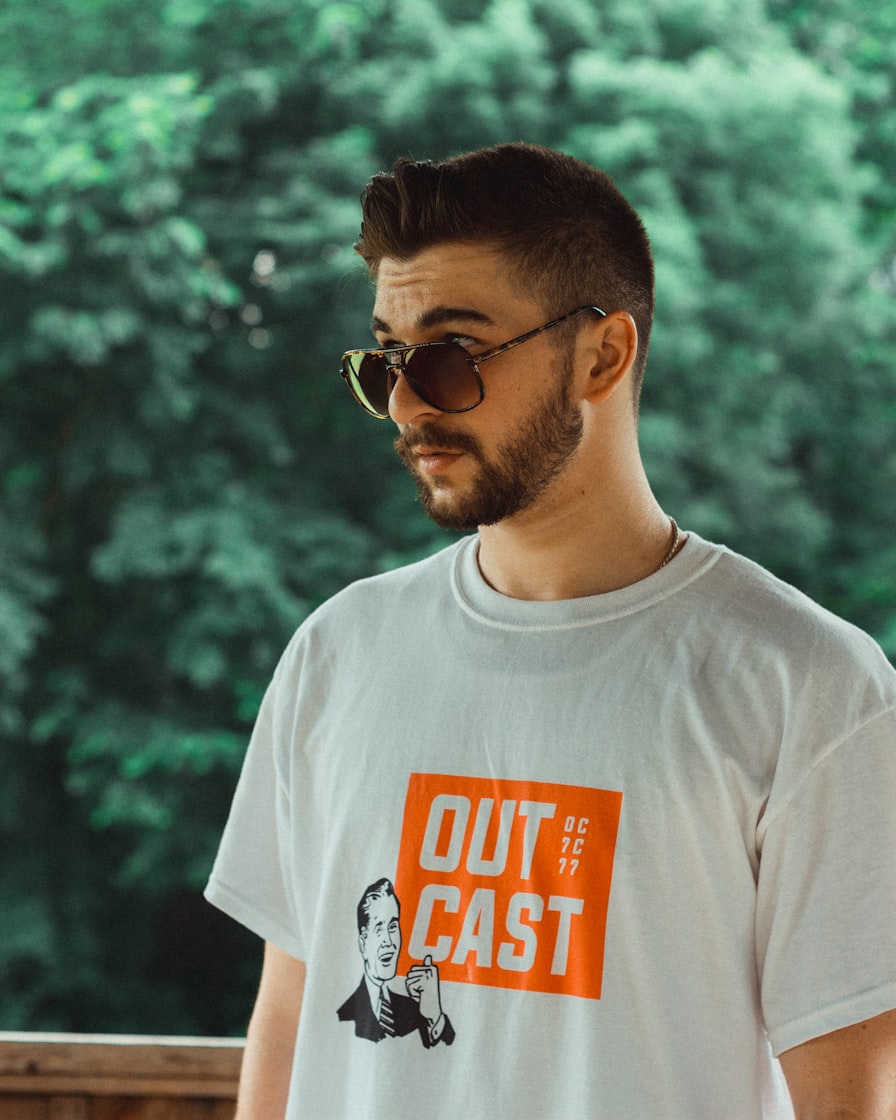
Avoid relying on sunglasses, beauty filters, group crops or repeated frames from one burst. These can conceal useful information. Good inputs do not guarantee a faithful result, so review every output individually.
Build the final set around distinct roles: a clear opener, a view of your overall appearance and context that reflects your real interests. Recent real photographs provide a useful reference for both you and anyone viewing the profile. There is no evidence supplied here for an ideal AI-to-real ratio or a guaranteed increase in matches.
What a vendor gallery can prove
A vendor gallery shows selected examples of style, framing and detail. It does not establish what every customer receives, how many outputs will be usable or how well the system will preserve your particular face.
Look at several subjects and larger images when available. A before-and-after pair is informative only when its labels and provenance are clear. Do not assume that an attractive example represents an average result. Apply the same scrutiny to MatchPhotos, which sells AI dating photos and publishes this guide.
Before buying, check the current source-photo requirements, package contents and refund conditions. Decide which missing image roles you need rather than treating the number of generated files as the number of pictures you will use.
Your next step
Review your current pictures first, identify what is missing, then view MatchPhotos examples and pricing using the same checklist. Examples are a starting point for evaluation, not a promise of likeness, acceptance or dating results.